
An electronic door lock for outdoor use is a weatherproof, keyless access solution that replaces a conventional key with digital credentials such as a transponder, PIN or smartphone, and reports access activity back to a central system, whatever the weather.
Where entrances are unattended or particularly exposed, mechanical locking systems can quickly reach their limits: a lost key, an unauthorised duplicate or simple forced entry can create security vulnerabilities that are difficult to control once they’ve happened. Electronic outdoor locks address this directly, since permissions can be managed flexibly, access activity can be tracked, and an intelligent system can be configured precisely to suit the requirements of each site. Across large building estates and multi-site facilities in particular, weather-resistant outdoor locking can significantly improve overall security.
What Is an Electronic Door Lock for Outdoor Use?
An electronic outdoor door lock is a keyless access solution built specifically for demanding weather conditions. It combines a high level of ingress protection, such as IP66 protection against dust and powerful water jets, with mechanical robustness, so it can operate reliably in cold, hot or wet conditions. Digital credentials are issued individually to authorised users, letting the door be unlocked electronically from outside, and the system also lets access attempts be precisely monitored and recorded. Depending on the setup, it can also be managed centrally and, where required, controlled remotely.
In short: an electronic outdoor door lock swaps a physical key for a digital credential in a weatherproof housing rated to standards such as IP66, with access logged and manageable centrally.

Applications for Electronic Outdoor Door Locks
Electronic outdoor door locks offer considerable flexibility, covering everything from residential entrances to commercial premises and public buildings. External doors used by multiple occupants or user groups need to form part of the overall security strategy, since left unmanaged they can quickly become weak points, whereas electronic systems allow access to be managed precisely instead.
Typical applications include main and secondary entrances, underground and multi-storey car parks, cycle storage areas and cycle lockers, access points to waste and recycling areas, external lifts, fences and gates, and vehicle barriers at commercial and industrial sites. Secure yet convenient access management matters particularly across the external areas of commercial sites and public facilities, and electronic outdoor door locks make that possible, even though misconceptions about electronic locking systems still persist in some quarters.
In short: electronic outdoor locks suit any exposed external access point, from a car park barrier or cycle store to a main entrance, wherever multiple people or groups need managed access.
How Electronic Outdoor Locks Work
Electronic door locks rely on digital identification and authentication rather than a mechanical key, checking electronically whether a person is authorised before granting access. The right technology for a given application, whether that’s a PIN keypad, card, transponder, smartphone or another credential, depends on the security requirements of the site, and biometric options such as fingerprint scanners and facial recognition are also becoming more relevant in commercial environments.
Weather resistance comes from specialist seals, corrosion-resistant materials and enclosed electronic components that protect against moisture, dust and temperature fluctuations. These systems need to operate reliably and resist tampering even in high-traffic locations and under demanding environmental conditions, not just under ideal ones.
In short: outdoor locks authenticate digitally rather than mechanically, using whichever credential suits the site, inside housings engineered to resist moisture, dust and temperature swings.
Electronic or Mechanical: Comparing Outdoor Locking Systems
The benefits of electronic outdoor locks become clearest set against the limitations of conventional locking. Security is a key advantage, since unauthorised access is considerably harder when there’s no physical key to copy or steal, and access events can be recorded, with many systems supporting real-time monitoring too.
Electronic systems also help with day-to-day management. Users can be given individual access via a transponder, smartphone or PIN, permissions can be managed centrally, and a lost credential can be blocked immediately without replacing the entire lock. Remote management is another major benefit: with networked systems, doors can be unlocked remotely, access time windows defined, and permissions managed for specific user groups, which can significantly simplify everyday operations in multi-occupancy buildings or organisations with frequently changing users, contractors and other authorised personnel. The flexibility of electronic systems can also help when creating accessible entrances.
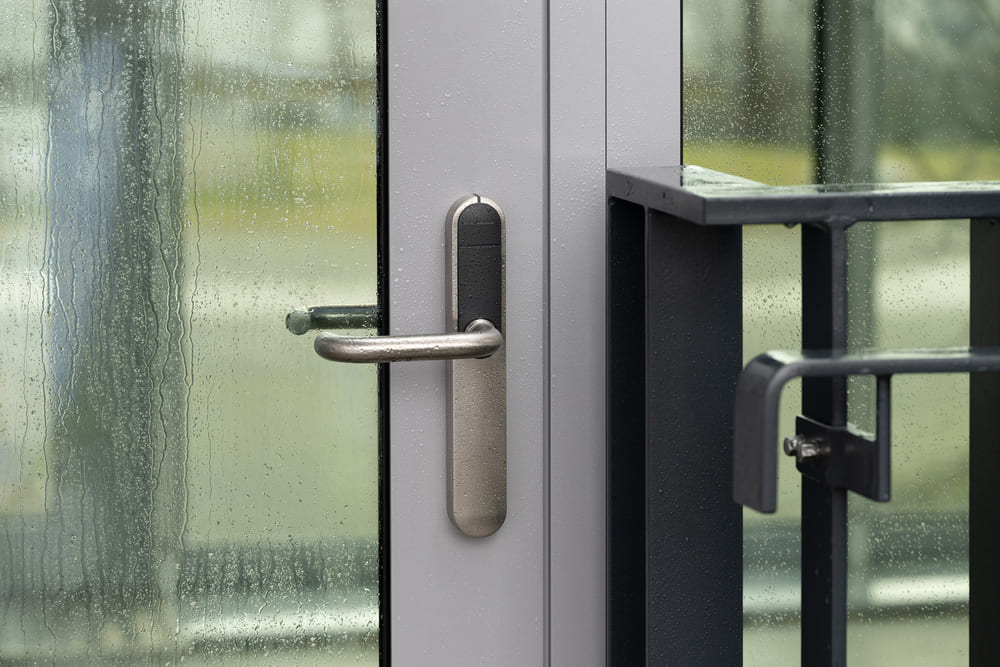
Mechanical locking systems tend to reach their limits much sooner outdoors. Exposure to the elements can cause corrosion, stiff mechanisms or frozen cylinders, and keys can still be lost, copied without authorisation or physically manipulated, all of which increase the security risk substantially.
In short: electronic outdoor locks remove the copy-and-lose risk of physical keys and add remote management, while mechanical locks remain more exposed to weather damage and key-related security risks.
Specifications to Look for in an Electronic Outdoor Lock
An electronic lock intended for outdoor use needs to be genuinely robust. It should withstand temperatures from -25°C to +60°C, resist rain, snow and dust, and provide protection against physical tampering. Most systems are battery-powered, and battery life matters: professional products can offer up to ten years of standby operation or 200,000 activations on a single battery, which is a clear operational advantage for facilities teams managing large numbers of access points.
The system also needs to integrate with existing doors and access points, whether that’s an older building, a glass door or a perimeter fencing system, so flexible installation options and compatibility with established locking and door-hardware standards are essential. Data protection needs taking seriously too when selecting and operating an electronic locking system, alongside the physical specification.
In short: check the temperature range, weatherproofing rating, battery life and installation compatibility together, since a lock that’s strong on one but weak on another won’t hold up outdoors long term.
The SimonsVoss Solution: SmartHandle AX Advanced
The SmartHandle AX Advanced is SimonsVoss’s door locking solution built specifically for outdoor applications and demanding environments. It combines weather-resistant mechanical components with intelligent, modular electronics, without the need for cabling. Its IP66 rating protects against dust and powerful water jets, while certified ES3 burglary protection in the M1 security escutcheon variant provides effective resistance against physical attack.
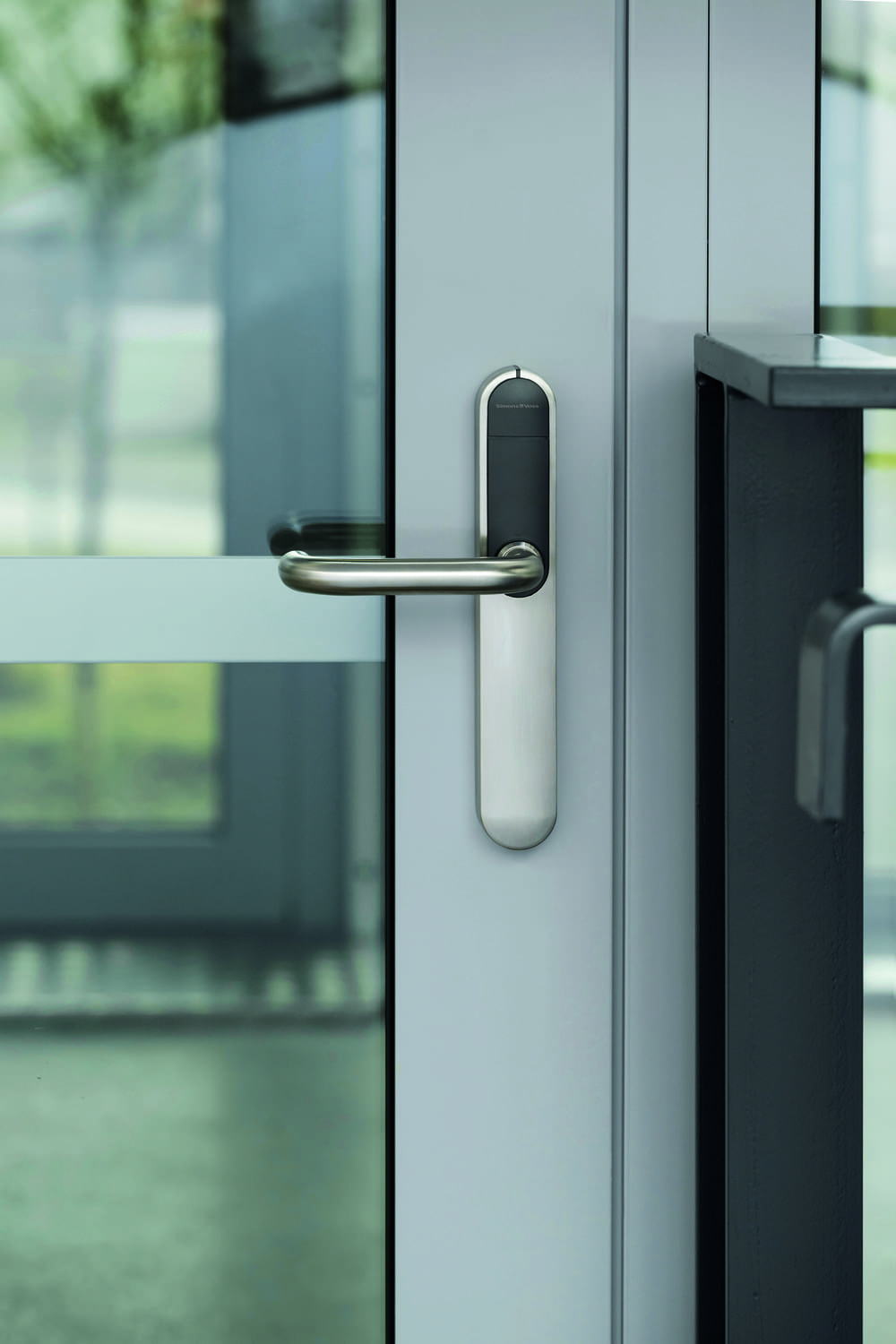
Bluetooth Low Energy, passive and active transponder technology, and support for smartphone access make operation flexible and intuitive. The AX Advanced A4 variant can also be used on escape routes in combination with panic exit hardware compliant with BS EN 1125, and one of its particular strengths is the range of available configurations: whether the installation needs a round or oval rose, a narrow-stile door or a solid door leaf, the SmartHandle AX Advanced can be adapted to a wide range of applications. Installation can generally be completed without additional drilling, and with a service life of up to one million operations, the mechanical components are engineered specifically for long-term outdoor use.
In short: the SmartHandle AX Advanced pairs IP66 weatherproofing and ES3 burglary protection with BLE, transponder and smartphone access, and can be fitted to most door types without extra drilling.
Want to find out more about SimonsVoss solutions for outdoor applications? Get in touch and we’ll advise on the right setup for your site.
FAQ
What does IP66 mean for an outdoor door lock?
IP66 is an ingress protection rating showing the lock is protected against dust and against powerful water jets, which is a key requirement for reliable outdoor operation.
How long do batteries last in an electronic outdoor lock?
Professional systems can offer up to ten years of standby operation or 200,000 activations on a single battery, though this varies by product.
Can an electronic outdoor lock be used on a fire escape route?
Yes, provided the specific model is designed for that purpose. The SmartHandle AX Advanced A4 variant, for example, can be used on escape routes in combination with panic exit hardware compliant with BS EN 1125.
What temperature range should an outdoor lock withstand?
A robust electronic outdoor lock should operate reliably from around -25°C to +60°C.
What happens if a credential is lost with an electronic system?
It can be blocked immediately without replacing the lock, unlike a mechanical key, which typically means changing the cylinder.
Does an electronic outdoor lock need cabling?
Not necessarily. The SimonsVoss SmartHandle AX Advanced, for example, combines weather-resistant mechanical components with modular electronics that don’t require cabling.